

Sergei Rachmaninoff’s Vespers (All-Night Vigil, Op. 37, 1915) is a masterpiece of Russian sacred choral music and one of the composer’s most deeply spiritual works. Written during World War I, it sets texts from the Orthodox offices of Vespers, Matins, and Prime for unaccompanied mixed choir. Across fifteen movements, Rachmaninoff combines ancient znamenny chants and chant-like melodies of his own invention with rich Romantic harmonies and intricate polyphony.
The music ranges from serene contemplation to radiant exultation, with striking dynamic contrasts and famously deep bass lines that test the limits of choral singing. The sixth movement, “Rejoice, O Virgin,” was Rachmaninoff’s personal favorite.
Though rooted in Russian Orthodox tradition, the Vespers transcends its liturgical context, offering a universal expression of spiritual devotion and human longing. It remains a cornerstone of the choral repertoire for its beauty, depth, and emotional power.
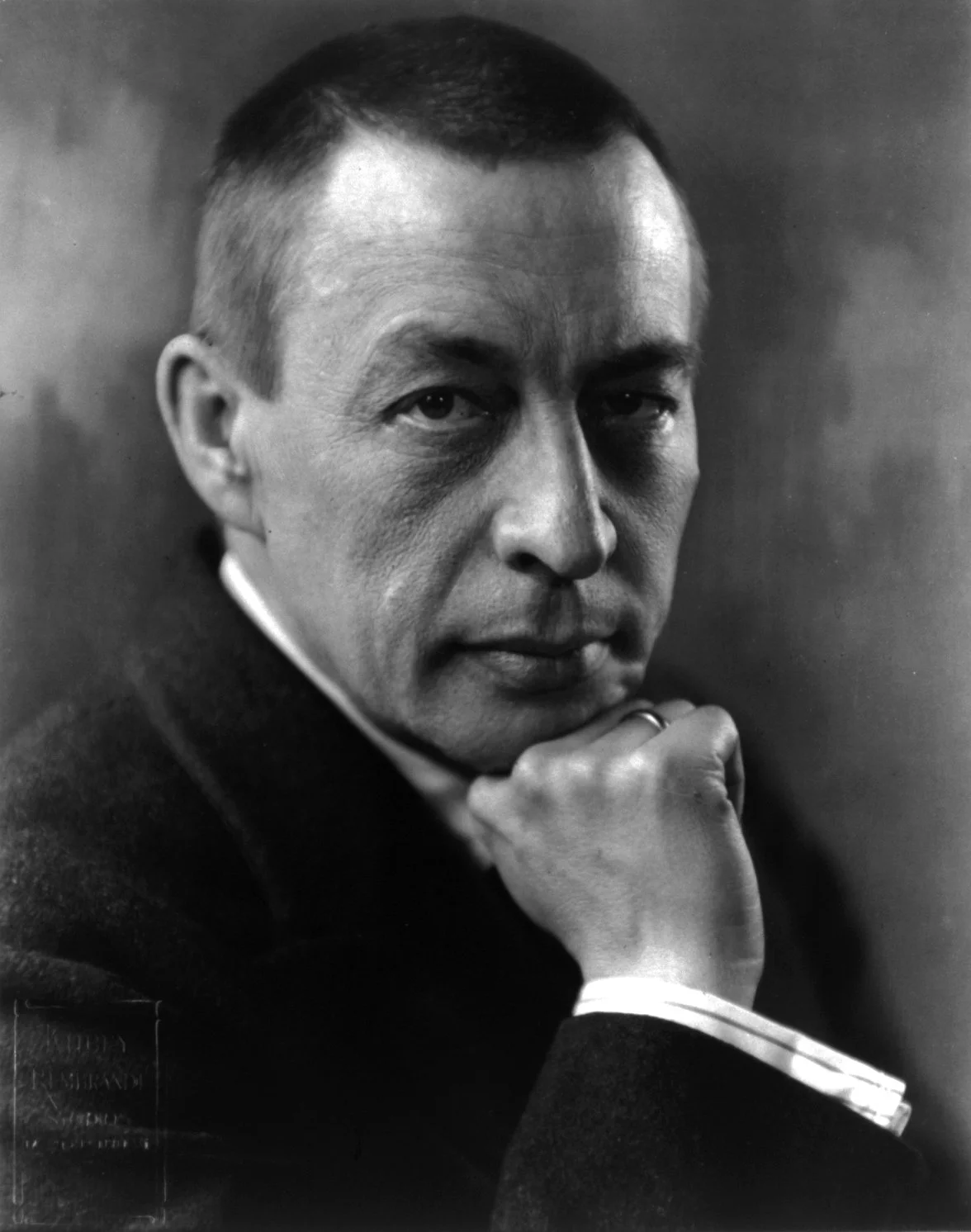
Sergei Rachmaninoff (1873–1943) was a Russian composer, pianist, and conductor, celebrated as one of the last great figures of the Romantic tradition. Born into an aristocratic family near Novgorod, he studied at the Moscow Conservatory, where he showed early brilliance as a composer and virtuoso pianist. His music is known for its sweeping lyricism, emotional depth, and technical mastery, exemplified in works like the Piano Concertos Nos. 2 and 3, the Rhapsody on a Theme of Paganini, and the Symphony No. 2.
After the 1917 Russian Revolution, Rachmaninoff emigrated to the West, living in the United States and Switzerland. Though he composed less in exile, he continued performing internationally, becoming one of the most acclaimed pianists of his era. His late works, including the Symphonic Dances and All-Night Vigil (Vespers), reflect both nostalgia for his homeland and a deep spiritual intensity. Rachmaninoff died in Beverly Hills in 1943.
1. Priidite, poklonimsya (Come, Let Us Worship)
2. Blagoslovi, dushe moya, Gospoda (Bless the Lord, O My Soul)
Grecheskago raspeva (Greek chant)
3. Blazhen muzh (Blessed is the Man)
4. Svete tikhiy (O Gladsome Light)
Kievskago raspeva (Kievan chant)
5. Nïne otpushchayeshi (Lord, Now Lettest Thou Thy Servant Depart in Peace)
Kievskago raspeva (Kievan chant)
6. Bogoroditse Devo (Rejoice, O Virgin)
7. Slava v vïshnikh Bogu (shestopsalmiye) (Glory to God in the Highest (the six psalms))
8. Khvalite Imya Gospodne (Praise the Name of the Lord)
Znamennago raspeva (Znamenniy chant)
9. Blagosloven yesi, Gospodi (Blessed Art Thou, O Lord)
Znamennago raspeva (Znamenniy chant)
10. Voskreseniye Khristovo videvshe (Having Beheld the Resurrection of Christ)
11. Velichit dusha moya Gospoda (My Soul Doth Magnify the Lord)
12. Velikoye slavosloviye (The Great Doxology)
Znamennago raspeva (Znamenniy chant)
13. Tropar'. Dnes spaseniye (Troparion. Today Salvation is Come)
Znamennago raspeva (Znamenniy chant)
14. Tropar'. Voskres iz groba (Troparion. Thou Didst Rise from the Tomb)
Znamennago raspeva (Znamenniy chant)
15. Vzbrannoy voyevode (To Thee, Victorious Leader)
Grecheskago raspeva (Greek chant)